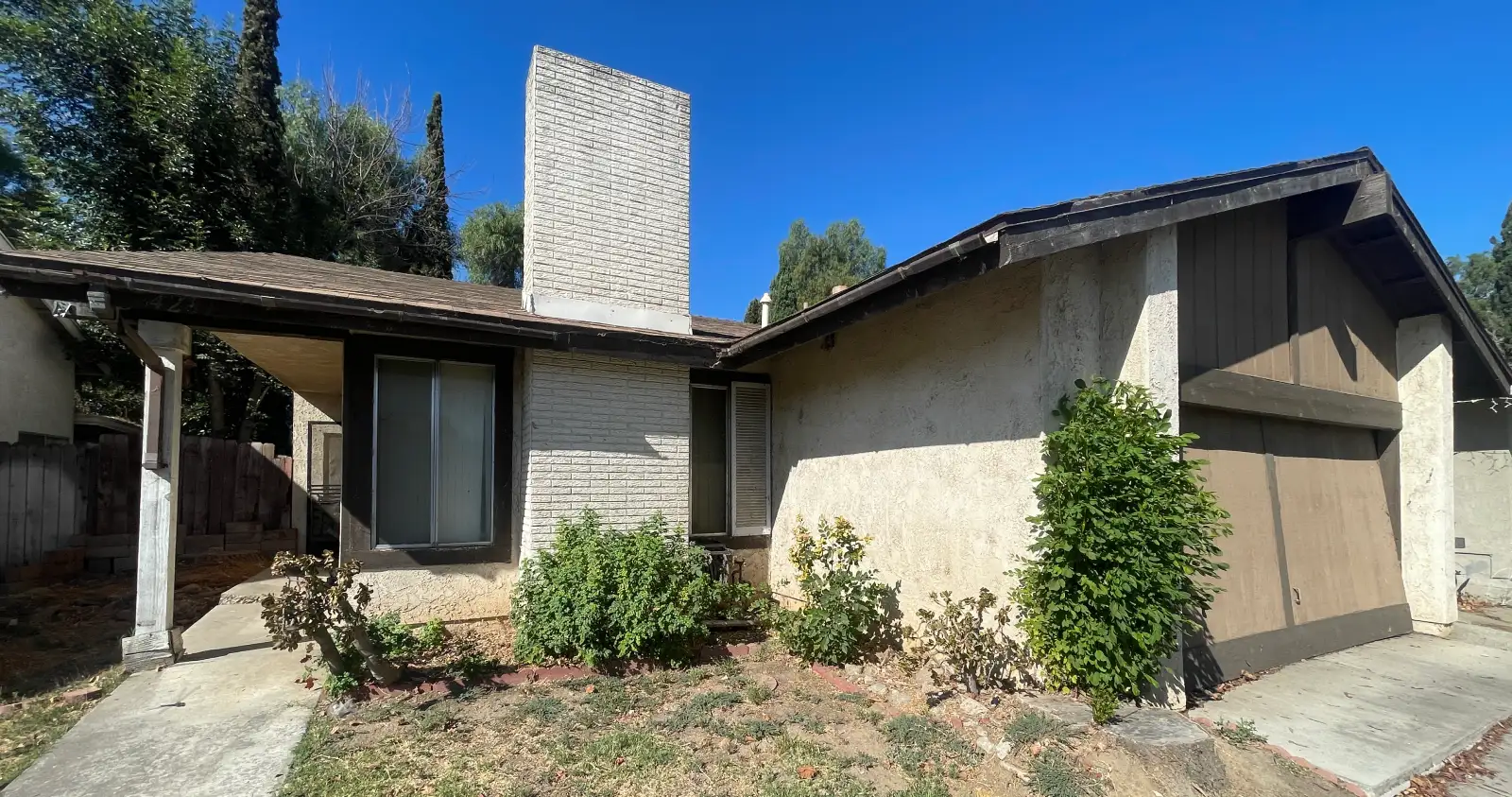
A Southern California fixer-upper can become expensive to hold while a seller waits for a conventional buyer. Repairs, difficult tenants, insurance, property taxes, utilities, and the risk of a financed deal falling apart can make the traditional process feel like another project instead of an exit.
An as-is cash home purchase is designed for sellers who want to transfer the property in its current condition. The buyer evaluates the house as it stands, without requiring the seller to complete a renovation, stage the property, or wait for mortgage underwriting.
This guide explains the meaning of an as-is cash sale, the benefits and tradeoffs, the difference between listing as-is and selling directly, and the questions Southern California homeowners should ask before signing with a buyer.
Key Takeaways
- An as-is cash buyer evaluates the property in its current condition and does not require pre-sale renovations.
- Sellers still need to disclose known material defects even when the property is sold as-is.
- Direct cash sales can avoid buyer-financing and appraisal delays.
- Net proceeds should account for commissions, closing costs, repairs, and months of carrying expenses.
- Proof of funds, local experience, contract terms, and a clear closing date are important when vetting a buyer.
What Is an As-Is Cash Home Purchase?
An as-is cash purchase means the buyer accepts the property’s current physical condition. The seller is not agreeing to install new flooring, replace an old HVAC system, paint the house, repair the roof, or clear out all the contents before closing.
The cash part is equally important. Because the buyer is not depending on a new mortgage, the sale does not have the same lender appraisal and underwriting requirements as a financed transaction.
The purpose is to convert the property into cash without making the seller manage inspectors, contractors, repairs, and buyer financing at the same time.
As-Is Does Not Mean No Disclosures
California sellers still have disclosure obligations. Selling as-is does not give a seller permission to hide known material defects. Known leaks, structural issues, unpermitted work, prior flooding, and other required disclosures should still be handled honestly.
The difference is that the seller is not promising to fix those disclosed conditions for the direct buyer before closing.
Benefits of Selling a House As-Is for Cash
The most obvious benefit is avoiding the repair and preparation phase. A seller does not have to hire cleaners or stagers, empty every room, coordinate contractors, or host public open houses.
The process can also provide more certainty because the buyer is not relying on a bank to approve the property or the loan. That removes the risk of a mortgage denial or appraisal gap ending the transaction late in the process.
Saving on Holding Costs and Commissions
Southern California property taxes, insurance, utilities, HOA charges, and maintenance can consume meaningful equity while a property sits unsold. A faster closing can stop those recurring expenses sooner.
A direct buyer also does not charge a listing commission. Sellers should compare the net amount after commissions, repairs, closing expenses, and carrying costs rather than focusing only on the highest possible retail price.
Solving Complex Property Problems
Inherited property, tenant problems, squatters, fire damage, structural issues, and other difficult conditions can narrow the traditional buyer pool. A direct buyer can evaluate those issues rather than requiring the seller to solve them first.
The main site’s inherited-house, bad-tenants, fire-damaged house, and hoarder-house resources explain several of those scenarios.
Traditional As-Is Listing vs. Professional Cash Purchase
Putting the words “as-is” in an MLS listing expresses the seller’s intention, but it does not prevent a buyer from requesting inspections or credits. It also does not force the buyer’s lender to finance a property that fails its condition standards.
A traditional buyer may enter contract at an attractive number and then renegotiate after inspections or appraisal. If that buyer cannot obtain financing, the seller may lose weeks and return to the market.
A professional direct purchase removes the buyer’s mortgage from the equation. The seller typically has one property walkthrough, a cash offer, and a defined escrow timeline instead of repeated showings and financing contingencies.
Compare the Net Sheet
The source article stresses that the final net proceeds are more important than the gross price. Transfer taxes, title and escrow charges, commissions, repairs, and carrying costs can all reduce what a seller actually receives.
Nuhome Capital structures its direct purchase without a seller-paid agent commission and states that it covers the ordinary closing expenses described in its offer. Sellers should still review the actual escrow statement and purchase agreement before closing.
Checklist for Vetting a Southern California Cash Buyer
The word “cash” is easy to use in advertising, so sellers should confirm that the buyer can actually perform. Ask for proof of funds from a recognizable financial institution rather than relying on a verbal promise.
Local presence also matters. Southern California neighborhoods and repair costs vary significantly between Los Angeles, Orange County, the Inland Empire, Riverside, and San Diego County.
- Request current proof of funds.
- Verify a real Southern California business presence.
- Read reviews from actual local sellers.
- Review the contract for service fees, marketing fees, and long inspection contingencies.
- Confirm the buyer has experience with title problems, probate, liens, and difficult property conditions.
Red Flags to Watch For
Do not pay an application fee just to receive an offer. Be cautious when a buyer provides a very high verbal number and then repeatedly lowers it during a long inspection period.
A vague closing date can also indicate that the buyer is still trying to find financing or another investor. A seller who needs certainty should understand the cancellation rights, inspection period, assignment language, and closing deadline before signing.
Why Local Expertise Matters
Repair costs, code enforcement, neighborhood demand, and property values are highly local. A buyer who understands Riverside, the San Gabriel Valley, Los Angeles County, and the Inland Empire is less likely to discover after contract that the original estimate was unrealistic.
Local experience can also help with issues such as tax liens, unpermitted additions, probate property, and heavily distressed homes.
Getting an As-Is Cash Offer From Nuhome Capital
Nuhome Capital positions its service as a direct purchase for homeowners who value speed and certainty. The property can be shown in its current condition, including damage, clutter, tenant issues, or deferred maintenance.
The company states that its process is built around a single walkthrough, a firm cash offer, and a closing date selected around the seller’s needs.
- Share the property details by phone or online.
- Complete a brief walkthrough to confirm the condition.
- Review the cash offer and choose the closing date if it works for you.
Serving Southern California
The direct-purchase model is used across Los Angeles County, Orange County, Riverside and the Inland Empire, San Bernardino County, and San Diego County. The company also works with inherited homes, rentals, hoarder properties, and fire-damaged houses.
If you want to compare an as-is number with the traditional listing option, request a cash offer and then evaluate both paths based on expected net proceeds and timing.
Take Control of Your Property Exit
An as-is cash home purchase is not the right answer for every seller. A clean, move-in-ready home with plenty of time may perform better with a traditional listing.
For a property that needs repairs, has occupants, is creating high carrying costs, or needs to close quickly, a direct purchase can remove the renovation and buyer-financing stages. The tradeoff is a price that reflects the property’s current condition in exchange for a shorter, more predictable path to closing.
Frequently Asked Questions
What does it mean to sell a house as-is?
It means the buyer accepts the property’s current condition without requiring you to complete repairs or improvements before the purchase. California disclosure requirements still apply.
Do I need to clean before a cash-buyer walkthrough?
No. Nuhome Capital evaluates properties in their current condition. You can leave ordinary clutter, old furniture, and unwanted contents in place during the walkthrough.
How quickly can I get a cash offer?
The company states that an offer can often be prepared within 24 hours after the property walkthrough. Closing can then move according to title, escrow, and the seller’s chosen timeline.
Will I receive a fair price for a cash sale?
Compare the direct offer with the expected net result of a traditional sale after repairs, commission, closing costs, carrying expenses, and the risk of a financed transaction falling through.
Can I sell with tenants or squatters still in the property?
A direct buyer may purchase with occupants in place. The legal circumstances should be disclosed clearly, and California landlord-tenant law still applies.
Are there hidden fees?
The source article states that Nuhome Capital does not charge seller commissions or service fees and covers the ordinary closing costs described in its offer. Review the signed contract and escrow statement to confirm the actual transaction.
What if the property has code violations or unpermitted work?
Those issues can be evaluated as part of an as-is offer instead of being corrected first. The buyer then assumes the post-closing responsibility described in the purchase agreement.
Do I need a Realtor for a direct cash sale?
No agent is required when you sell directly to a buyer, although you may choose to use an attorney, agent, or other adviser if you want independent representation.